
Editorial Guide
A practical resource for healthcare organizations evaluating technology, workflows, and operational requirements.
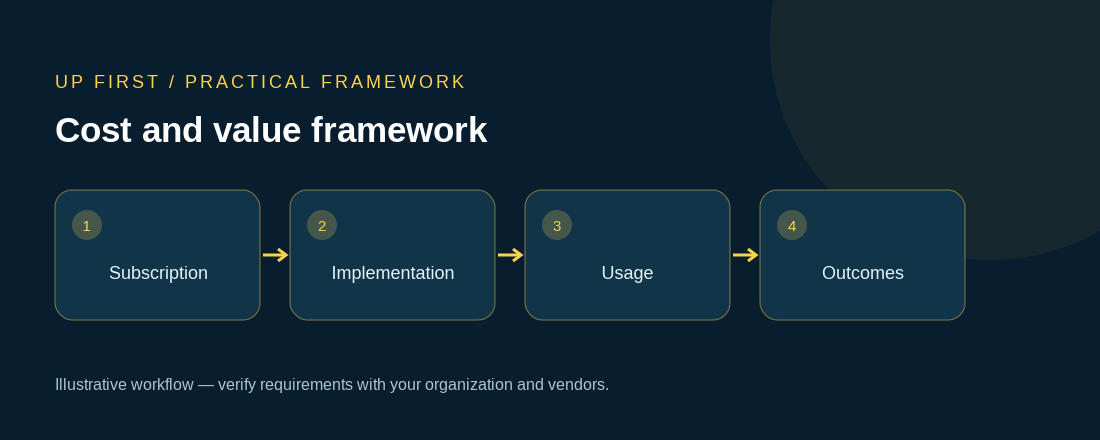
Look Beyond the Monthly Subscription
Healthcare AI pricing may involve subscription fees, usage-based charges, setup costs, integrations, support, and optional services.
A low advertised starting price does not necessarily represent the total cost of operating a platform within a busy medical practice.
Understand Usage-Based Pricing
Some products charge according to call minutes, conversations, messages, phone numbers, or other usage measures.
Ask how usage is calculated, what happens when allowances are exceeded, and whether unsuccessful or transferred interactions create charges.
Include Implementation and Training
Setup may require call-flow configuration, calendar integration, staff training, workflow testing, and adjustments after launch.
Organizations should account for internal staff time as well as vendor fees.
Estimate Operational Value
Potential benefits include fewer missed administrative inquiries, reduced repetitive work, and improved availability for routine requests.
Calculate value using your own baseline metrics. Avoid assuming every automated call represents a recovered appointment or direct revenue.
A Practical ROI Framework
Define a measurement period and compare total costs with verified operational improvements. Include staff time, implementation expenses, ongoing subscriptions, and error correction.
Use conservative assumptions and review patient experience alongside financial outcomes.
Create a Total Cost of Ownership Model
Build a worksheet with recurring subscription charges, per-minute or per-conversation usage, phone services, implementation, integration maintenance, training, support, and any optional features. Include the time your staff spends configuring and supervising the system. Compare costs over a defined period rather than looking only at the first invoice.
Ask whether vendor prices exclude taxes, carrier charges, additional locations, or data exports. Model a typical month and a high-volume month. If the contract includes minimum commitments or annual increases, reflect them in the forecast. A transparent cost model makes vendor proposals easier to compare.
Separate Savings From Revenue Assumptions
Reducing repetitive calls may free staff time, but freed time is not automatically a cash saving. Likewise, a missed call does not always represent a lost appointment. Distinguish between measurable labor efficiency, improved service availability, recovered bookings that can actually be verified, and benefits that are harder to price.
A clinic might track the number of requests completed without staff intervention and the amount of follow-up work generated. To estimate financial impact, compare those outcomes with a baseline and document assumptions. Avoid presenting a speculative revenue figure as a proven return on investment.
A Worked Evaluation Framework
Consider a hypothetical clinic evaluating a monthly software fee plus variable call charges. The clinic records its current administrative call volume, staff handling time, appointment errors, and after-hours messages. During a pilot, it measures the same indicators and subtracts implementation and review time from any operational gains. The example is a method, not a claim about typical clinic savings.
Calculate net benefit as verified financial value minus total incremental cost. If the organization cannot assign a credible monetary value to an outcome, report it separately as a service or experience measure. Sensitivity analysis is useful: test conservative, expected, and optimistic scenarios before deciding whether a subscription is sustainable.
Questions for the Finance and Operations Teams
Who owns the budget? Which departments receive the benefits? What happens if call volume doubles? Are transfers charged? Can the clinic exit if integration fails? What internal work will continue after launch? These questions reveal costs that may be missed in a vendor quote.
Review performance at agreed intervals and compare actual invoices with forecasts. A product can be worthwhile even without dramatic savings if it improves access and reduces operational friction, but that conclusion should be explicit and supported by evidence. Good purchasing decisions balance cost, patient experience, risk, and reliability.
Further reading
Official resources for additional context; these links do not imply endorsement.
Continue your research
Compare healthcare AI platforms, review their focus areas, and confirm product capabilities directly with vendors before making a decision.
Explore Comparison Guide →